After-School Activities That Actually Work for Kids with ADHD
Last updated: August 2026
You know the drill. Your kid walks in the door already bouncing off the walls, homework nowhere in sight, and you're bracing for either a good afternoon or a rough one. If your child has ADHD, you've probably lived both versions more times than you can count.
Here's what I've learned: the right activity isn't just something to fill the 4pm gap. Pick well, and it becomes the thing that actually calms your kid down and makes them feel good at something. Pick badly, and you're just moving the meltdown from home to the car park.
What's actually going on
ADHD isn't a discipline problem. It affects executive function, the part of the brain that handles attention, impulse control, and organization (per CHADD, one of the go-to resources on this).
What that means in practice:
- Attention is selective, not absent. Boring or repetitive tasks lose them fast. Something that genuinely grabs their interest? They'll hyperfocus for an hour.
- Movement isn't the distraction, it's the tool. Sitting still often makes focus harder, not easier.
- They need fast feedback. A caught ball, an earned belt, a level cleared. Slow-burn progress with no visible wins is deflating.
- Overwhelm hits quickly. Loud, chaotic, unpredictable settings tip them over fast. Calm and structured helps them settle.
The good news: the American Academy of Pediatrics has real data linking physical activity to better mood, focus, and self-regulation in kids with ADHD. The right activity isn't just a distraction from symptoms, it genuinely helps.
This isn't just a nice idea, either. A 2025 analysis pooling 19 randomized controlled trials found that physical activity produced meaningful gains in executive function for school-aged kids with ADHD, with the biggest improvements showing up in cognitive flexibility and working memory, the exact skills that make homework and instructions easier to handle. It also matters how the activity engages the brain: exercise that asks a kid to think while they move, react to an opponent, follow a sequence, adjust to a partner, tends to outperform repetitive movement with no mental component. That's a big part of why the picks below aren't random.
What to look for, before you sign up for anything
1. Structure and routine. Same format, clear rules, predictable rhythm every time. This isn't restrictive for these kids, it's a relief. No guessing what happens next.
2. Real movement. Not just "sits still and colors." Look for hands-on, active engagement.
3. Fast feedback loops. Belts, badges, levels, points, anything that shows progress quickly and often.
4. Small groups, low chaos. Ask directly: how many kids per instructor? How do they handle a kid who's struggling to focus? Their answer tells you a lot.
Which type of exercise helps with what
Not all movement targets the same skill. Recent research breaks it down by exercise type, which makes it easier to pick based on what your specific kid struggles with most.
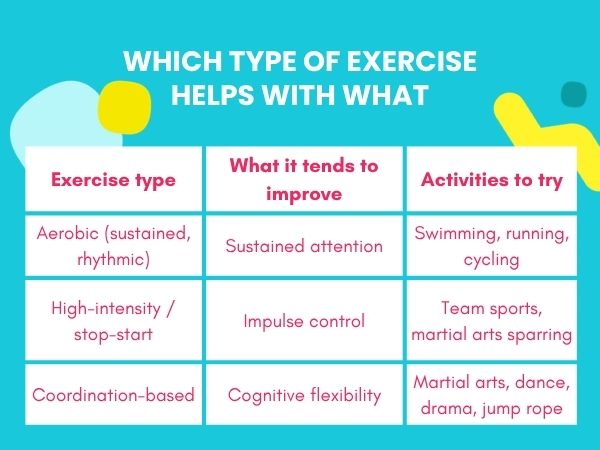
If your kid's biggest struggle is staying focused on one thing, lean toward aerobic. If it's blurting out or acting before thinking, high-intensity, stop-start activities tend to help more. If it's rigidity, meltdowns over small changes, trouble switching gears, coordination-heavy activities that force quick adjustments tend to have the edge.
A quick note on where they play, too. Outdoor time seems to add something on top of the exercise itself. Kids with ADHD who regularly play in green, natural outdoor settings tend to show milder symptoms than kids who play indoors or on paved, built surfaces, and even a short stretch outside has been linked to a short-term bump in concentration. It's not a reason to skip indoor activities your kid loves, but if you're choosing between two similar options, the one outdoors gets a small edge.
Activities worth trying
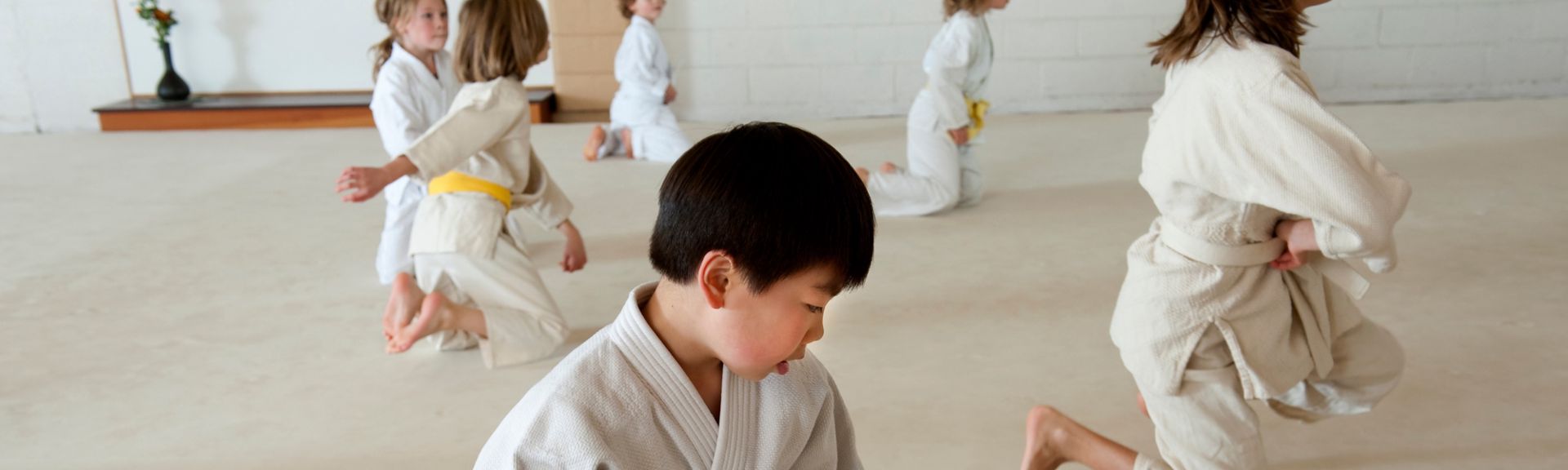
Martial arts (judo, karate, taekwondo). The belt system is basically a built-in feedback loop, and the coordination and quick reactions involved make it one of the stronger options for impulse control and cognitive flexibility. Find an instructor who's actually good with high-energy kids, not just tolerant of them.
Swimming. Rhythmic, aerobic, calming for a lot of kids, and one of the better options if sustained attention is the main struggle. Progress is easy to track and it's a genuinely useful skill to have, especially with all the lakes around us. Go for small classes and patient instructors, ideally outdoors when the season allows.
Team sports (football, basketball, hockey). Great if your kid thrives on pace and energy. Harder if waiting for a turn or reading social cues is the sticking point. A smaller team with a coach who gets it makes a real difference either way.
Art. Painting, pottery, sculpture. No "right answer" pressure, real hands-on focus, works at their own pace. Small studio classes tend to feel calmest.
Drama. Movement, imagination, performing, all in a structured setting. Builds confidence and social skills without the sit-still-and-listen format that's hardest for these kids.
Coding clubs. Write it, see it work, instantly. That immediate feedback loop is exactly what an ADHD brain responds to. Look for small groups with real support, not just a room full of screens.
"We tried three different clubs before judo stuck. The first two were too loud and too unstructured, and every pickup was a meltdown. Judo had a routine my son could predict from the first minute, and watching him earn his first stripe on his belt was the first time I'd seen him proud of himself after school in months." — a Momizen parent
Setting them up to succeed
- Let them pick. An activity they actually want beats one you chose for them, every time.
- Tell the instructor. With your kid in the loop, let the instructor know what helps. A good one will welcome it, not flinch.
- Warn before transitions. "Five minutes until we go" isn't nagging, it's prep. Switching gears is genuinely hard for these kids.
- Keep it consistent. Same day, same time, every week if you can manage it.
- Praise the effort, not just the win. "You really stuck with that" lands harder than praise saved only for winning.
- Don't overload the calendar. One activity they love beats three they're exhausted by.
- Feed and rest them first. A hungry, overtired kid with ADHD has a much harder time, full stop.
When it's actually the wrong fit
A rocky first week or two is normal. These are signs it's genuinely not working:
- Dread that isn't easing after several weeks
- Meltdowns before or after almost every session
- An instructor who shames or singles your kid out instead of supporting them
- A chaotic environment that leaves them dysregulated every time
- Their confidence or mood is visibly dropping, and it's spilling into home life
- No progress and no enjoyment after a real trial
Switching activities isn't giving up. It's you paying attention.
Quick answers
Best activities for ADHD kids? Anything combining movement, structure, and fast feedback. Martial arts, swimming, team sports, art, drama, and coding all fit the bill, but it depends on your specific kid.
Are sports actually good for ADHD? Yes, the AAP backs this up. Movement supports focus and self-regulation. Smaller or individual sports often suit kids who find big, loud settings overwhelming.
Should I tell the instructor about the diagnosis? Generally, yes, with your child's input. It's a partnership, not a confession.
Why does my kid quit everything after a few weeks? Usually because it's repetitive, slow-feedback, or overwhelming, not because something's wrong with them. Give a new activity a fair few weeks before deciding.
How many activities is too many? If you're asking, probably too many. One loved activity beats three tolerated ones. Protect downtime and sleep.
Can an activity actually help with symptoms? It's not a treatment, but the AAP's research does link movement to real improvements in focus, mood, and regulation.
Bottom line
Your kid doesn't need to be contained, they need the right outlet. Movement, structure, fast wins, low chaos. Get that match right, and the after-school scramble can turn into the best part of their day.
This week: pick one movement-based activity your kid is actually curious about and ask for a trial session. Watch how the instructor handles a high-energy kid in that first 20 minutes. You'll learn more from that than from any brochure.
ADHD looks different in every child. This isn't medical advice, talk to your pediatrician or a specialist for guidance specific to your family.
Sources and further reading: CHADD resources on ADHD and executive function; American Academy of Pediatrics (AAP) guidance on physical activity and ADHD; a 2025 meta-analysis of 19 randomized controlled trials on physical activity and executive function in children with ADHD (Research in Developmental Disabilities, 2025); 2025 research on exercise type and targeted cognitive benefits in ADHD; studies on green space, outdoor play, and ADHD symptom severity (Faber Taylor & Kuo, via AttitudeMag).
Reviewed for accuracy against current pediatric research as of August 2026.