Should We Ban Kids from Social Media?
Why I Think We're Asking the Wrong Question
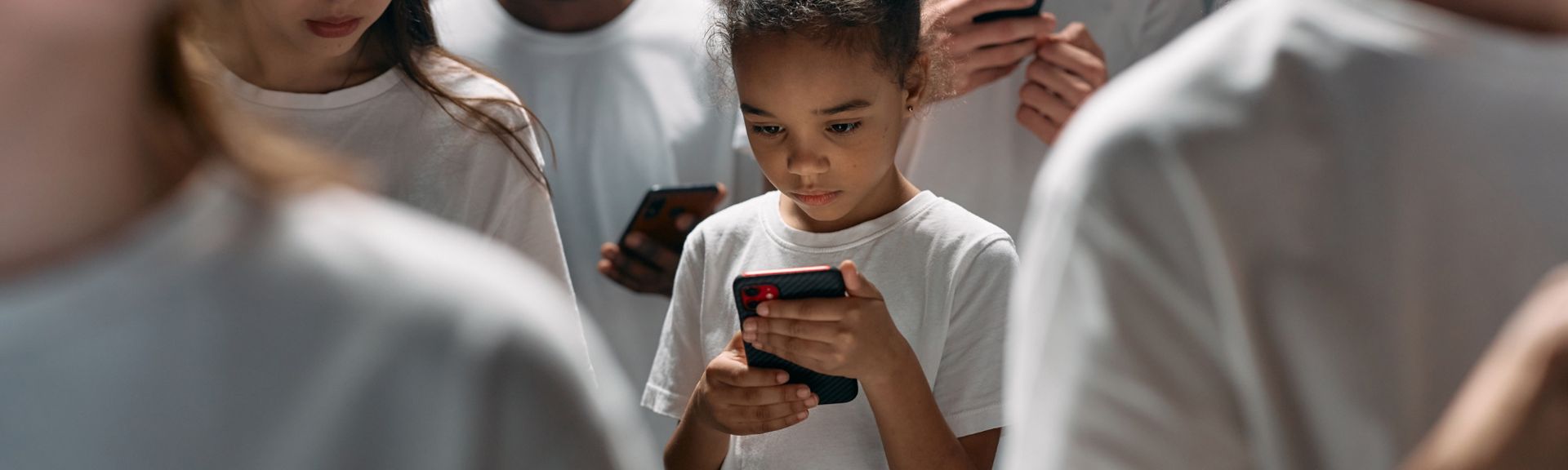
I pick up my phone to check one thing and then twenty minutes went by. And the uncomfortable truth is that I know what's happening to me. I've built up enough self-awareness, enough life experience, to at least recognise the pull, even when I don't resist it. But our children? They don't have that yet. Their brains are still forming. They don't have the inner voice that says wait, I've been here too long. They just feel the draw, and they follow it.
Governments across the world are sitting with the same discomfort, and unlike most of us, they're actually doing something about it. Country after country is stepping in, drafting laws, setting age limits, trying to figure out how to protect kids in spaces that didn't exist a generation ago. What they decide in the next few years will quietly shape a huge part of our children's lives.
And while this ambiguity is not enough, I read something in WIRED en Español (the English version published online on July 23rd 2026) that I haven't been able to shake. It didn't give me easy answers, it actually made me question the way I'd been framing the whole thing. So here I am, sharing it with you, with a bit of extra context for those of us living in Switzerland or Greece, where things are moving faster than most people realize.
What's Actually Happening Around the World
Let's start with the facts, because things are moving fast.
Country after country is now stepping in to limit children's access to social media:
- Australia switched on a full ban for children under 16 in December 2025, blocking millions of accounts.
- France has moved to ban social media for under-15s, aiming for the start of the school year.
- Spain is preparing a ban for under-16s, along with a law to hold executives personally responsible for hate speech.
- Austria is pursuing a ban for children under 14.
- Denmark, Poland, and Malaysia are all either considering or drafting similar rules.
This isn't a fringe idea anymore. According to a YouGov poll reported by The Guardian, up to 79% of people across several European countries support banning under-16s from social media. Parents, unsurprisingly, are among the strongest supporters.
So there's real momentum. But there's also real doubt about whether these bans will actually work, and that's the part I want us to sit with.
What This Means in Switzerland
Here in Switzerland, the mood is shifting too, even if the approach is more measured.
A survey by GfS Bern for the Mercator Foundation found something striking: 94% of Swiss respondents felt children should be better protected from the harmful effects of social media. That's near-total agreement, which is rare on any topic. On top of that, 78% believed big tech companies hold too much influence over public opinion.
Swiss Interior Minister Elisabeth Baume-Schneider has said she's open to a possible ban for young people. And her government is already drafting legislation to regulate major online platforms, with a focus on making them more transparent about how they operate.
So while Switzerland hasn't announced a hard cut-off like Greece, the direction of travel is clear. Stronger protection is coming. The question is what shape it takes.
What This Means in Greece
If you're raising kids in Greece, this is no longer a distant debate.
Prime Minister Kyriakos Mitsotakis announced a social media ban for children under 15, and he did it in a way that says a lot about the moment we're in: he posted the news as a TikTok video, speaking directly to young people. The ban is expected to come into force and would restrict access to Facebook, Instagram, TikTok, and Snapchat for children born after 2012.
His reasoning will feel familiar to any parent. He pointed to rising anxiety, sleep problems, and the deliberately addictive design of these platforms. As he put it, "science is clear: when a child spends hours in front of a screen its mind gets no rest."
Greece has been building toward this for a while. The government already:
- Banned mobile phones in schools
- Set up parental control platforms to help families manage screen time
And the concern isn't abstract. Greek teachers have described children arriving at school so sleep-deprived they can barely function. One retired headteacher told The Guardian, after 40 years in the classroom, that screens had changed his students in ways he found deeply troubling.
Mitsotakis has also called for a united European approach, urging the EU to standardize age-verification tools. So Greece isn't acting alone. It wants to lead.
Here's Where I Pause
When something feels dangerous, our instinct as parents is to remove it.
But the WIRED article made an argument that I keep coming back to, and I think it deserves our attention.
Social media, it suggested, is more like a bicycle than a cigarette or vaping.
Think about that for a second. A cigarette or a vape has no safe version. There's no "good" amount. So we warn, we restrict, we discourage.
A bicycle is different. We know accidents happen. But nobody suggests banning bikes. Instead, we build bike lanes. We set traffic rules. We teach kids how to ride. We hand them helmets and knee pads. We demand safety standards from manufacturers.
We reduce the risk without giving up the benefit.
And that reframing matters, because the digital world isn't separate from our children's real lives anymore. It's an extension of them. Their friendships, their humor, their creativity, their sense of belonging, so much of it lives there now. The goal shouldn't be to lock them out. It should be to make those spaces safe to be in.
The Cracks in the "Just Ban It" Approach
The more I read, the more I noticed how uneven these bans actually are.
Many of them target Facebook, Instagram, TikTok, and Snapchat, but leave out other spaces where children face real risk. WhatsApp, where kids message constantly. Roblox, where they can interact with strangers. Meanwhile YouTube, which many families use for learning, often gets swept up too.
So a ban built around a specific list of apps has a weakness because much of the harm is structural. And any list of apps risks becoming outdated the moment a new platform or app appears.
So What Actually Helps? We All Have a Role
The challenge and in a way the encouraging side is that protecting children online isn't one group's job but a collective effort shared among the platforms, the governments, school, parents and children themselves.
- Platforms carry huge responsibility here. Their algorithms are at the heart of the problem, and they can be at the heart of the solution. Designing for children's safety from the start isn't a favor or a nice-to-have. It should be a starting-point requirement regardless of advertising profits.
- Governments should find ways to enforce parental controls, less addictive design (goodbye, infinite scroll) before apps hit the market, and real transparency about how algorithms decide what our kids see.
- Schools can weave digital literacy into everyday learning, not as a one-off topic, but as a real skill. Kids need to know how to spot risks and what to do when something feels wrong. Gen Z is already paving the way to this by being highly attuned to what they have termed as AI slop and what is human-made content.
- Families need guidance, not guilt. We don't have to become tech experts overnight but instead receive a structured direction. Most importantly, we just need to keep talking with our kids, spending time watching content together if necessary and starting conversations.
- And children themselves are not just people to be protected. They have rights, and they understand these spaces in ways we sometimes don't. Including them in the conversation within reason makes our solutions better, not weaker.
A Few Gentle Steps You Can Take at Home
Change takes time and in the mean-time childhood is fleeting. Don’t let tech take away your children’s formative years, here are small things that help:
- Talk more than you ban. Ask your child what they love about the apps they use. Curiosity opens more doors than rules.
- Set up the tools that already exist. On most phones, screen-time settings take five minutes to switch on.
- Protect sleep first. If nothing else, keep phones out of the bedroom at night. This one change often makes the biggest difference.
- Model it yourself. Our kids watch what we do at the dinner table far more than what we say.
- Stay informed. Rules are changing quickly in both Switzerland and Greece. Knowing what's coming helps you prepare calmly instead of reacting in a rush.
A little at a time is better than no action at all.
After sitting with all this research, I’m trying to come to terms with a line from the WIRED article:
Maybe it's time we start asking why is it easier to ban things than to demand better conditions? Instead of how do we keep our children off the internet?
Since our children are growing-up in a screen-filled world they deserve digital spaces built with the same care, the same guardrails, and the same love and time we give them offline. Instead of pushing for a ban, governments and advertisers must be more involved in design-change.
How are you handling this in your own home? We're all figuring it out together, and honestly, that shared honesty is what keeps me going.
Sources: This article was inspired by a piece originally published in WIRED en Español. Additional reporting and research drawn from Reuters and The Guardian.