Momizen visits: The people and places behind Zurich's schools
Is two years old too young to learn a second language? It's one of the first questions parents ask when they start looking at bilingual preschools. We checked out how OBS in Wollerau handles it.
What does a good day at preschool look like when you are two or three years old? At Obersee Bilingual School in Wollerau, it might involve building a tower, discovering which objects float, singing in two languages, running outdoors, sharing lunch with friends and perhaps, for the first time, putting on your own shoes without help.
Choosing a first nursery or preschool can feel like a surprisingly big decision. For parents, questions about educational approaches and language learning matter. But often, the most immediate concerns are much simpler: Will my child feel safe? Will the teachers really know them? What happens if they don't speak the language? Will they eat, sleep, make friends... and be ok when I leave?
At Obersee Bilingual School (OBS) in Wollerau, those questions sit at the heart of its approach to Early Years education. OBS is a bilingual German-English school educating children from Babycare through Preschool and Kindergarten and onwards into Primary and Secondary education. Its Preschool programme is designed for children aged two to four, with groups of up to 12 children.
Arrival, a gentle start to the day
For a young child, simply arriving at preschool is a significant transition.
At OBS, children arrive between 8.15 and 9.00 am and are personally welcomed by their teachers. Some immediately find a friend or favourite toy while others need a little more time and reassurance before saying goodbye to mom or dad.
There is no expectation that every child should start the day in exactly the same way. Children can choose from prepared activities such as puzzles, drawing or games, or simply begin by playing.
This flexibility is particularly important during the settling-in period.
Rather than expecting children to adapt within a fixed number of days, the team works with each family individually. Some children benefit from a gradual introduction; others find a short, confident goodbye works better. The aim is to build trust with both child and parent and allow each child to find their own way into the new routine.
So what does a two-year-old actually learn through play?
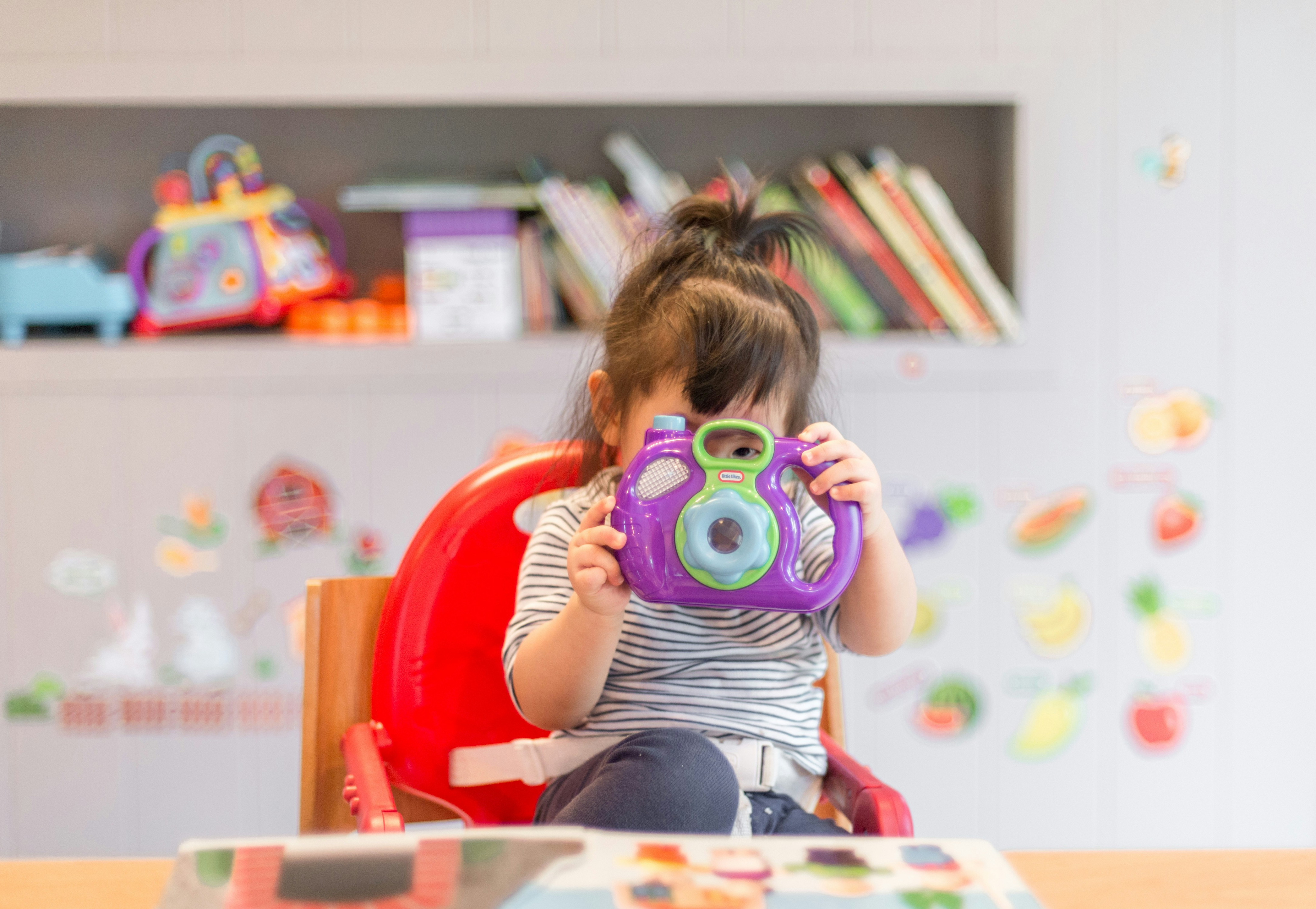
At first glance, much of an OBS Preschool day looks exactly as early childhood should: children are playing.
Look a little more closely, however, and a great deal of learning is taking place.
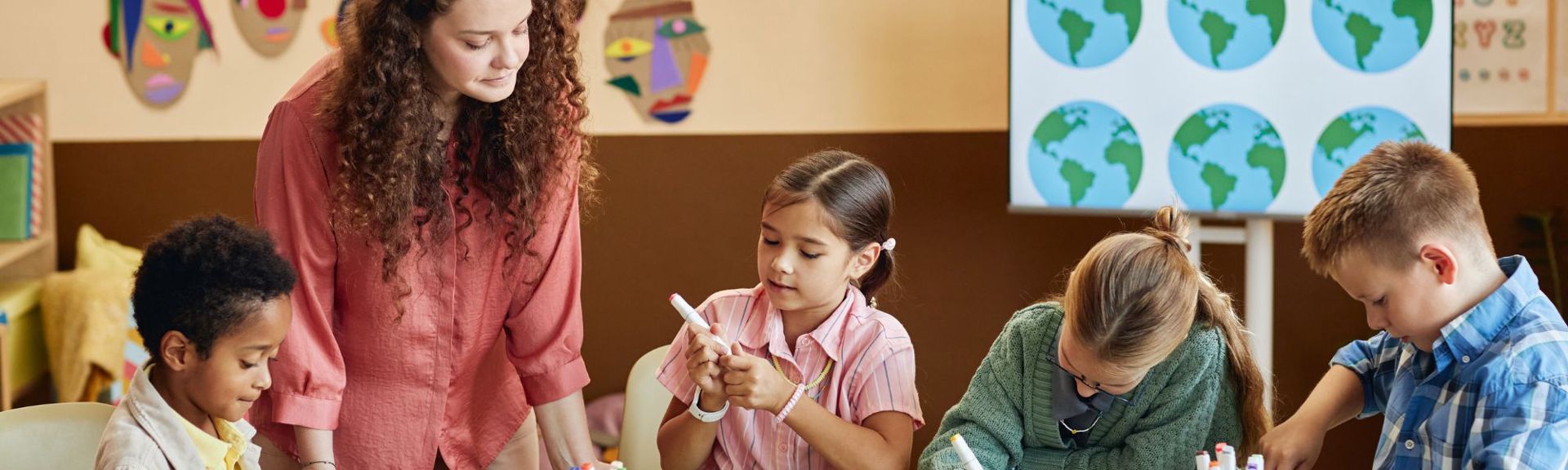
A child building a tower is experimenting with balance and developing spatial awareness, problem-solving skills and fine motor control. A pretend restaurant becomes an opportunity to practise language, cooperation and negotiation. Playing with water can turn into an early science experiment as children discover what sinks, what floats and what happens when one container is poured into another.
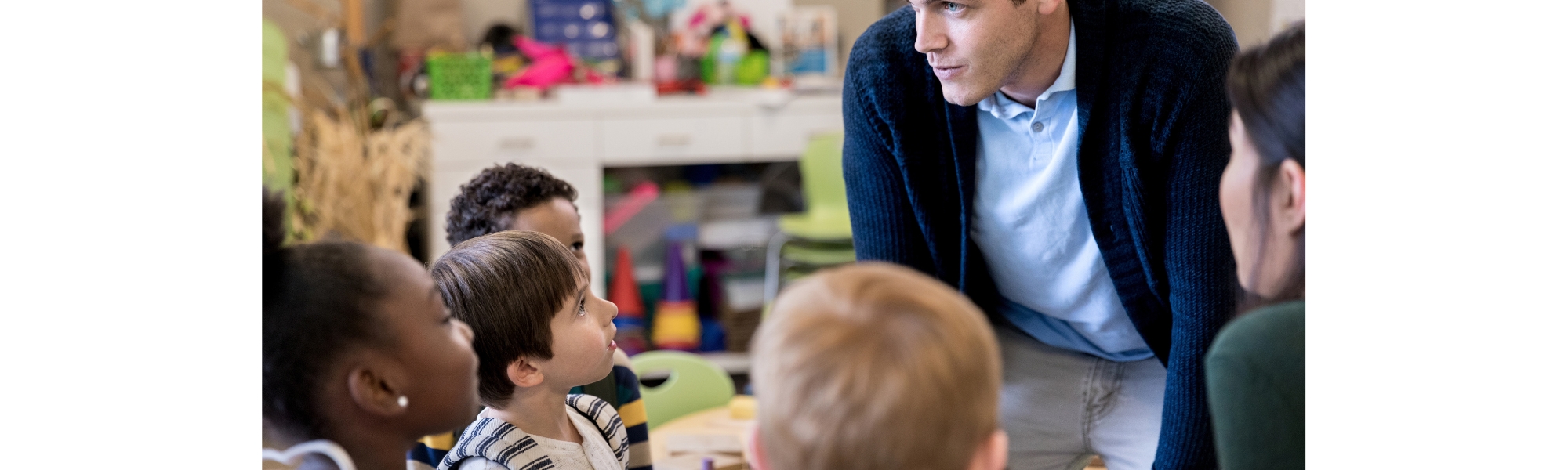
The educator's role is not simply to provide instructions. Teachers observe, ask questions, introduce new vocabulary and find ways to extend an idea that has captured a child's interest.
Children therefore have considerable freedom to choose what they explore, alongside planned experiences involving stories, music, creative activities, movement, language, cooking or science.
Importantly, a planned activity does not mean that every child has to produce the same result.
Learning two languages without having a "language lesson", and is two years old too young for two languages?
At OBS, German and English are not taught as conventional language lessons in Preschool. Instead, one teacher communicates with the children in German and another in English, allowing both languages to become a natural part of daily routines, relationships and play. A child does not need to speak German or English before joining.
Children come from German-speaking, English-speaking and multilingual homes, and teachers use gestures, visual cues, repetition and familiar routines to make sure that children can communicate before they have the words themselves.
It is also normal for a child to spend time observing before beginning to speak a new language.
Gradually, teachers see children begin to understand familiar instructions, experiment with individual words and phrases and become more confident communicating with their friends. Sometimes the breakthrough is wonderfully ordinary: a child suddenly uses a new German or English word spontaneously in the middle of a game.
Time to move, explore and slow down
A typical Preschool day balances activity with quieter moments.
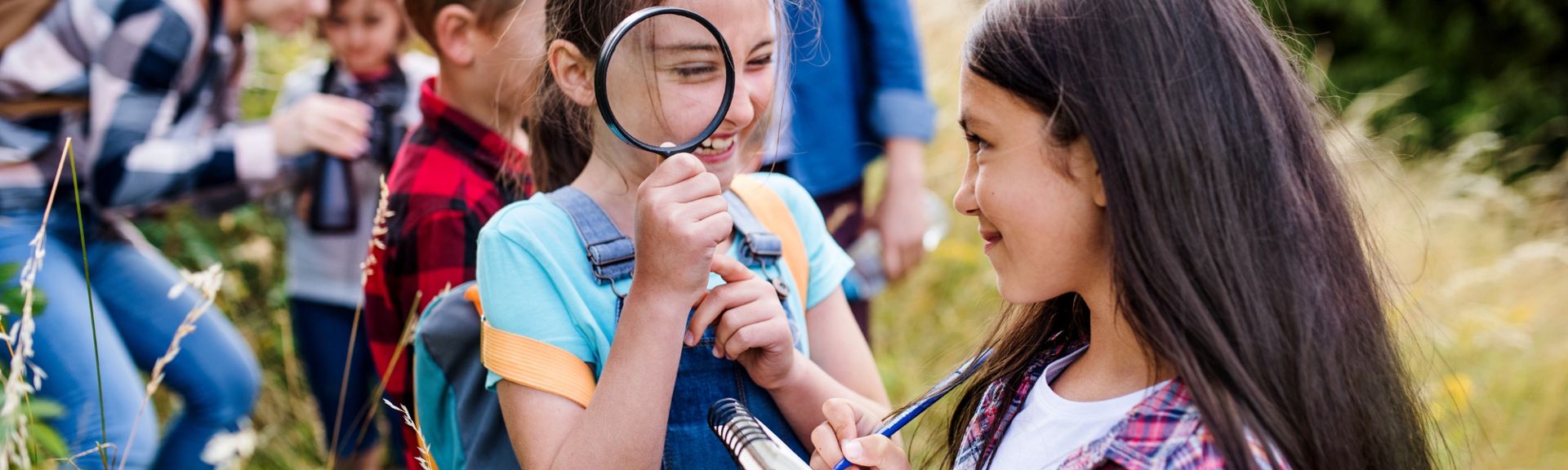
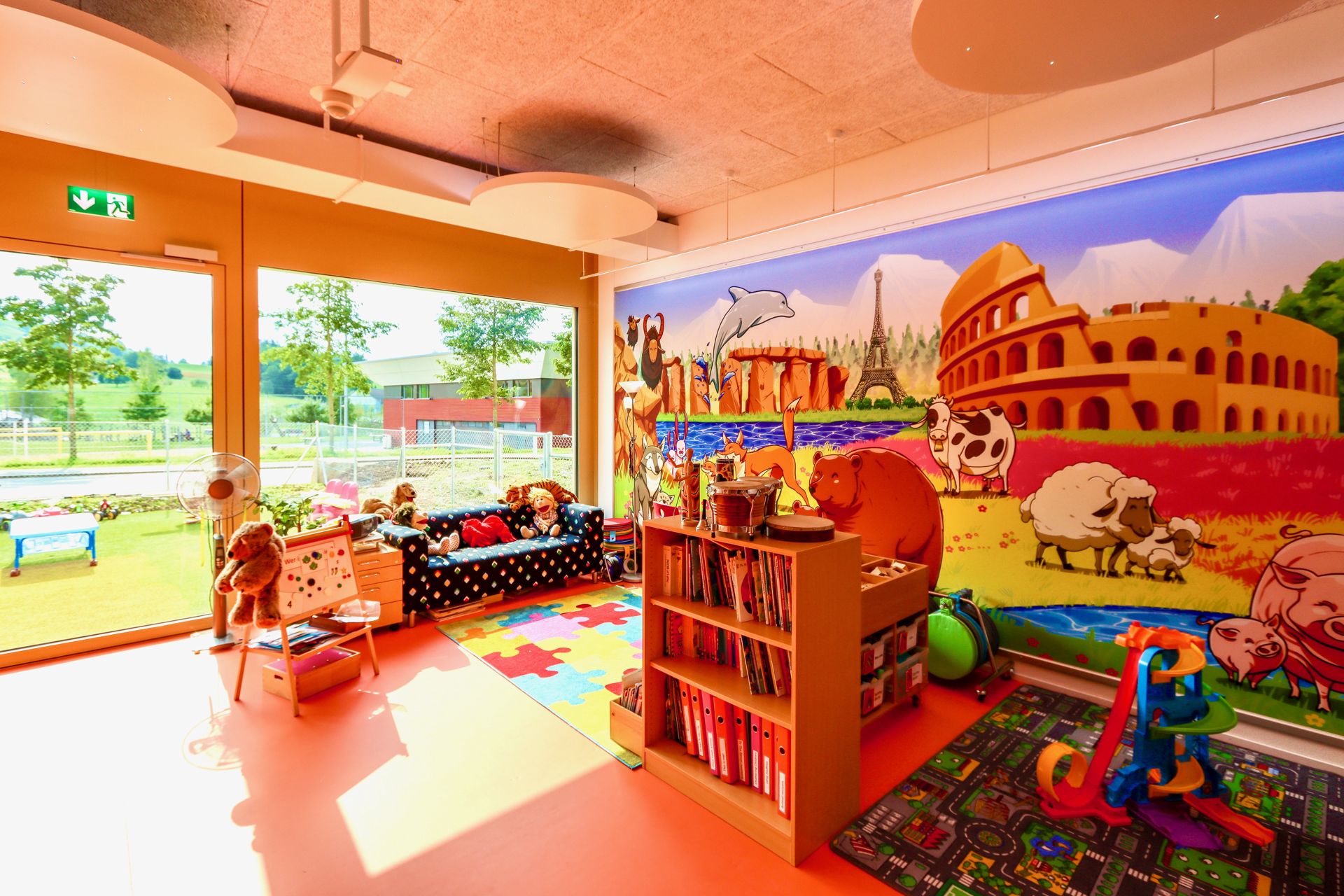
Children spend time outside exploring, playing and moving, and the surrounding environment is used for nature exploration as well as physical play. Twice a week they also have access to a dedicated Movement Room where they can run, climb, balance, jump and develop their gross motor skills.
There are snacks during the morning and afternoon and lunch together in the school Mensa, with meals freshly prepared by the school's own cook. Even eating together is considered part of learning: children practise handling utensils, making choices, taking turns, talking with one another and gradually becoming more independent.
After lunch comes quiet time. Children who still need to sleep can nap, while those who have grown out of daytime sleep have calm activities such as puzzles or drawing.
It is an important distinction in the OBS approach: children of the same age do not necessarily have identical needs.
Small groups, individual children
With Preschool groups of up to 12, educators can get to know children closely – not only their developmental progress, but their personalities.
Teachers observe what a child repeatedly chooses, what fascinates them, which friendships they form, what they avoid and where they may need either more reassurance or more challenge.
For parents, this can matter enormously.
A two-year-old cannot always explain that they had a difficult day, found something overwhelming or have suddenly become fascinated by dinosaurs. Much of good Early Years education therefore depends upon adults who notice.
At OBS, observation is used to adapt activities and support rather than expecting each child to fit the same pattern.
"I can do it myself"
Ask what parents are likely to notice after their child's first year and the answer is not a list of academic milestones.
It is independence.
Children begin to manage familiar routines, communicate what they need, make choices, negotiate friendships and resolve small conflicts. Their language develops and they become increasingly confident exploring unfamiliar situations.
The Early Years team describes one of the most significant developments as the emergence of a very simple feeling: I can do it myself.
It might reveal itself when a child who previously needed help suddenly puts on their own shoes, serves themselves at lunch, joins another group of children or confidently tries a new word.
Those small moments represent something much larger: children discovering that they are capable.
Preparing for school without rushing childhood
There is inevitably another question on parents' minds:
Will my child be ready for Kindergarten and school?
OBS's approach is to build readiness without turning Preschool into formal schooling.
Early literacy and numeracy emerge through stories, songs, conversation, construction, cooking, play and everyday routines. Alongside them come the less easily measured skills children will also need: concentration, communication, problem-solving, emotional regulation, motor skills and the ability to participate in a group.
At around four, children can move into the OBS bilingual Kindergarten, where learning becomes gradually more structured while maintaining the school's emphasis on exploration and play. German and English continue, with the principal language alternating from week to week in Kindergarten.
For families who value continuity, children can remain within the same OBS community from Babycare and Preschool through Kindergarten, Primary and ultimately Secondary School. The school describes this as a connected educational journey from early childhood through Upper School. Explore all school levels at OBS
And what about working parents?
The realities of family life matter too.
OBS is open from 7.15 am until 6.30 pm, with Early and Late Care available around the core programme. Holiday programmes are also provided for parts of the school holidays.
Parents receive information about their child's experiences and development through the school's communication and portfolio systems, but the everyday conversations at drop-off and pick-up remain important – particularly during those first weeks when both child and parent are finding their feet.
Families who would like to find out more about availability, visits and joining the Early Years programme can also contact the OBS Admissions team.
What should parents really look for in a preschool?
Perhaps the most useful advice from the OBS Early Years team has little to do with impressive facilities or lengthy lists of curriculum features.
When visiting a nursery, preschool or kindergarten, watch the people.
How do teachers speak to the children? Do the children appear comfortable approaching them? Do teachers notice individual children and respond to what they need? Is there room to move, play, explore and create? Is there a healthy balance between structure and freedom?
Most of all, look at the relationships.
Because for a very young child, feeling safe, understood and connected is not separate from learning.