Clean Monday with Kids: A Greek Tradition Explained for International Families
How kite flying and outdoor play become meaningful learning moments
If you’re an international family living in Greece or Switzerland, you may have noticed that Clean Monday (Kathará Deftéra) feels different from many public holidays. There are no parades, no big performances, and no fixed schedule. Instead, families head outdoors, children fly kites, and the day unfolds slowly and naturally.
Clean Monday marks an important cultural moment in Greece and offers families—especially those raising children in a multicultural environment—a beautiful opportunity to experience local traditions through play, nature, and shared time.
What Is Clean Monday? (In Simple Terms)
Clean Monday marks the start of Lent in the Greek Orthodox calendar. Traditionally, it represents a transition:
- from Carnival festivities to a calmer period
- from indulgence to simplicity
- from noise to reflection
For children, this doesn’t need to be explained in religious terms. A simple explanation works best:
“It’s a day when families slow down, spend time outside, and make space for what feels important.”
Why Do Children Fly Kites on Clean Monday?
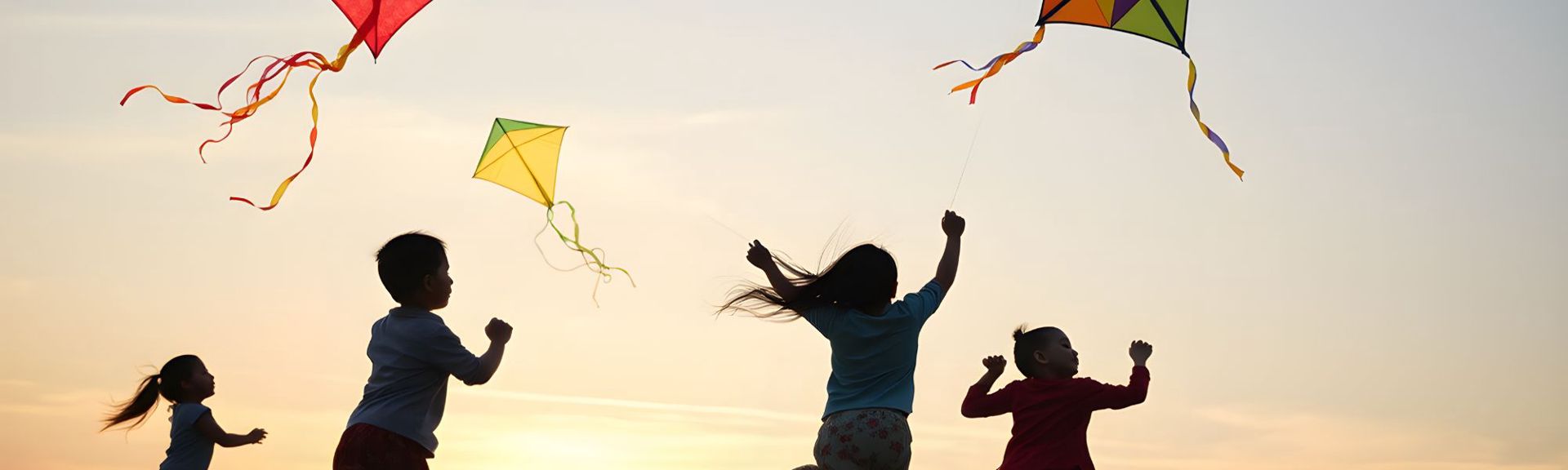
One of the most recognizable traditions of Clean Monday is flying a kite. You’ll see families in parks, fields, hills, and beaches, all sharing the same simple ritual.
Symbolically, kite flying represents:
- freedom
- connection between earth and sky
- starting fresh
Historically, the tradition came to Greece through older folk customs and influences from Eastern cultures. Over time, it became a central part of Clean Monday—especially for families with children.
For kids, flying a kite naturally teaches:
- patience (it rarely works perfectly at first)
- teamwork (one holds the string, another runs)
- awareness of nature (wind, direction, strength)
Turning a Cultural Tradition into Learning
Science Through Experience
Flying a kite opens the door to simple scientific thinking:
- What makes the kite rise?
- How does the wind affect it?
- Why does it fall when the wind changes?
No lesson plan needed—just curiosity and observation.
Creativity & Cultural Understanding
Many families make their own kites, which:
- helps children understand how objects are constructed
- opens conversations about how traditions were passed down
- connects creativity with cultural heritage
This is especially meaningful for children growing up between cultures.
Emotional & Social Learning
When the kite doesn’t fly:
- children learn to handle frustration
- they experience perseverance
- they see that success isn’t always immediate
These moments support emotional resilience—without pressure.
Food, Simplicity & Shared Meals
Clean Monday meals are traditionally simple and plant-based. Even for international families, this can be an easy way to:
- explore local food culture
- talk about seasonal and mindful eating
- enjoy a relaxed family meal outdoors
The focus isn’t on rules—but on togetherness.
Why This Day Matters for Children
Clean Monday is unique because it often includes:
- no strict schedule
- no performance expectations
- minimal screen use
For children, this unstructured time supports:
- independence
- imagination
- connection to nature
It also helps them understand that traditions don’t have to be loud or complex to be meaningful.
Simple Questions to Ask Your Child
After the day, reflection can happen naturally:
- “What did you enjoy most today?”
- “What felt difficult?”
- “What surprised you?”
- “Why do you think people keep this tradition?”
These conversations help children process culture, experience, and emotion together.
Final Thoughts for International Families
You don’t need to “get everything right” to participate in Clean Monday. Whether your kite flies high or barely lifts off, the experience itself is what matters.
By joining local families outdoors, sharing simple food, and allowing the day to unfold slowly, children learn something deeper than facts—they learn how culture is lived.
🪁 How to Choose the Right Location
✔ Open space with no power lines ✔ Clear horizon ✔ Easy access for children ✔ Space for picnics or free play
📍 Athens & Attica
- Attiko Alsos – easy access and plenty of open space
- Ellinikon Metropolitan Park – ideal for families with strollers
- Mount Hymettus (open clearings) – fewer crowds, close to nature
- Mount Parnitha (meadows) – a great option for a day trip
- Southern Attica beaches – wide open spaces and good wind
📍 Thessaloniki
- Pedion tou Areos – a classic Clean Monday destination
- New Waterfront (Nea Paralia) – open views and easy access
- Seich Sou (forest clearings) – fresh air and natural surroundings
A perfect city for combining kite flying with a relaxed family walk.
📍 Patras
- Agia Beach – large open area, ideal for children
- South Park of Patras – well-organized and family-friendly
- EOT Beach – open space with reliable wind
📍 Larissa
- Alcazar Park – a favorite spot for local families
- Pinios River banks – natural setting with room to play
📍 Heraklion, Crete
- Karteros Beach – excellent wind conditions for kites
- Ammoudara Beach – easy access and plenty of space
📍 Ioannina
- Litharitsia Park – open space with scenic views
- Areas around Lake Pamvotida – calm, nature-focused experience
📍 Volos
- Volos Beachfront – wide horizon and open space
- Agria coastal areas – fewer crowds and plenty of room
Mini Checklist for Parents
- Kite + string
- Water & snacks
- Hat / sunscreen
- Comfortable shoes
- A bag for trash (respecting nature)