
How to Reduce Sugar in Sweets Without the Kids Complaining
Every parent knows the struggle: you want your kids to eat healthy, but they want candy. It’s a delicate balance. Excessive sugar consumption is linked to various health issues, from cavities to obesity, but banning sweets entirely often backfires, making forbidden treats even more desirable.
You don't have to choose between health and taste. With a few smart substitutions and culinary tricks, you can create desserts that are nutritious, delicious, and, most importantly, kid-approved. Let's look at how you can "outsmart" our little friends’ sweet tooth.
The Power of Fruit
The most natural way to sweeten a recipe is to use whole fruits. Fruit contains fructose, but it comes packaged with fiber, vitamins, and water, which help the body absorb the sugar more slowly.
- Ripe Bananas: The riper the banana (look for brown spots), the sweeter it is. They can replace sugar and oil in cakes, muffins, and pancakes, adding moisture and flavor.
- Applesauce: Unsweetened applesauce adds moisture and subtle sweetness. It’s perfect for brownies and oatmeal cookies where texture is key.
- Dates: Dates are often called "nature's candy." You can soak and blend them to create a paste that replaces sugar at a 1:1 ratio in many recipes, especially in energy bars and raw vegan desserts.
Natural Sweeteners with a Lower Glycemic Index
If you want to avoid white processed sugar but need something stronger than fruit, there are natural alternatives. While still forms of sugar, they often offer more nutrients or have a lower impact on blood sugar levels.
- Maple Syrup: Rich in flavor and containing antioxidants, pure maple syrup is a great liquid sweetener. It pairs perfectly with pancakes and yogurt.
- Honey: Honey is sweeter than sugar, so you can use less of it to achieve the same taste. Note: do not give honey to children under one year old.
- Coconut Sugar: This has a lower glycemic index than white sugar and a wonderful caramel flavor that works beautifully in cookies and crumbles.
Spices and Extracts: The Secret Allies
Sometimes, what we perceive as "sweet" is actually aroma. By boosting flavors, you can reduce the amount of sugar without anyone noticing the difference.
Cinnamon, nutmeg, and cloves give a sensation of sweetness. Try increasing the amount of cinnamon in apple pie or rice pudding and reducing the sugar by 25%. Also, vanilla extract is essential. A high-quality vanilla can make a dessert seem much richer and sweeter than it actually is.
Stevia and Erythritol: The Zero-Calorie Solutions
If the goal is a drastic reduction in calories and sugars, modern sweeteners are a viable solution, provided they are used in moderation so as not to alter the taste significantly.
Stevia is a plant-based sweetener much sweeter than sugar. Use it cautiously because it can leave a bitter aftertaste if you overdo it. Erythritol is a sugar alcohol that closely resembles sugar in texture and doesn't spike blood sugar. It is ideal for baking, as it behaves similarly to regular sugar in doughs and batters.
Gradual Reduction: The Key to Success
The most important trick isn't an ingredient, but a method. Children's taste buds adapt. If you cut sugar abruptly, they will notice immediately and likely reject the treat.
Start by reducing the sugar in your recipes by 10-15%. They likely won't even notice. After a few weeks, reduce it a little more. Gradually, kids will get used to less sweet flavors and start to appreciate the natural sweetness of the ingredients.
Healthy eating doesn't have to be boring. With a little imagination and the right substitutions, you can offer your children sweet treats that nourish their bodies and satisfy their cravings.
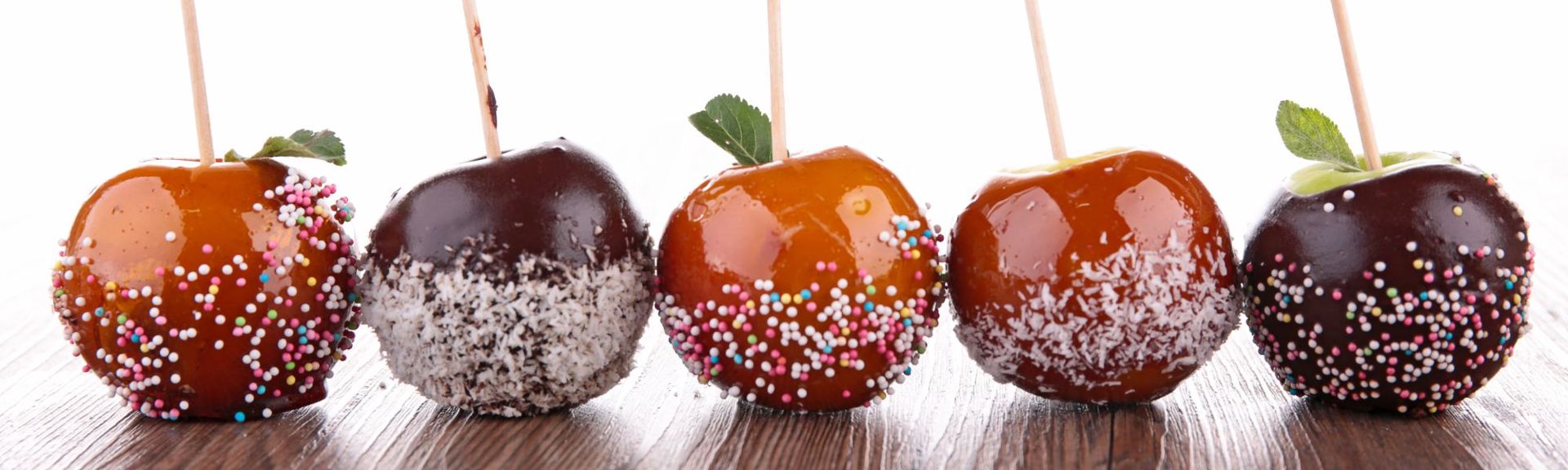
Alt Text: A row of five candy apples on a wooden surface against a white background. The apples alternate between caramel and chocolate coatings, with toppings of colorful sprinkles or shredded coconut. Each apple has a wooden stick and some feature small green leaves at the base.