
Naxos With Kids: The Ultimate Family Travel Guide Summer 2026
Planning a trip to the Greek Islands with children might seem like a massive undertaking, but it is entirely within your reach. Greece offers a magical blend of ancient history, beautiful beaches, and a famously welcoming culture that embraces children of all ages.
The secret to balancing relaxation with exploration lies in choosing the right destination, and understanding the local logistics before you pack your bags. This comprehensive guide walks you through exactly how to plan a stress-free, unforgettable getaway to Naxos in the Cyclades, located in the central Aegean Sea.
We also cover real price ranges, the best areas to stay for families, age-appropriate activities, and a full daily budget breakdown so you can plan with confidence.
Why Naxos Is the Ultimate Family Secret
When most people think of the Cyclades, their minds immediately jump to the iconic blue domes of Santorini or the bustling beach clubs of Mykonos. While those islands are undeniably beautiful, they are often packed with tourists, expensive, and notoriously difficult to navigate with a stroller. Naxos is still iconic, but a lot more zen.
As the largest island in the Cyclades, Naxos offers a much more traditional, laid-back vibe without sacrificing convenience. You get the whitewashed architecture and narrow winding alleys, but with room to breathe. The island has protected its authentic charm, meaning you will share tavernas with local families rather than just other tourists.
Because Naxos produces much of its own food, potatoes, cheeses, meats, and wine, it does not rely solely on tourism. This agricultural backbone makes the local food incredibly fresh, varied, and affordable. Those famous Naxian potatoes, chopped in-house and fried fresh at local tavernas, will ruin supermarket chips for your children forever.
The insider edge: Naxos is the 7th most visited Greek island overall, but it is large enough that you rarely feel the crowds. Unlike Mykonos or Santorini, it remains genuinely family-priced even in peak season.
The best time to go when school holidays are not a requirement, are June and September.
July and August are the peak months, bringing the highest prices, the Meltemi winds, and the biggest crowds, though even then, Naxos is significantly calmer than Mykonos or Santorini. If school holidays force you into August, go, you will still love it.
June offers warm weather (around 26–28°C), calm seas ideal for toddlers, and hotel rates that are noticeably lower than peak season. Everything is open, the beaches are quiet in the mornings, and the island is at its most vibrant without being overwhelming.
September is arguably the very best month. Sea temperatures reach their annual peak (24–26°C), crowds thin out dramatically after the first week, and accommodation prices drop significantly. Evening temperatures are perfect for long taverna dinners with the kids.
Best Areas to Stay
Getting your base right is the single most important decision you will make for this holiday. Here is what each area offers families:
Naxos Town (Chora) Best for First-Timers and Easy Logistics
The island capital sits right on the port and gives you the most flexibility. Agios Georgios Beach is a short walk away, the bus station connects you to all the southern beaches, supermarkets are plentiful, and the pedestrianized old town is safe for evening strolls with children. If you do not want to rent a car for the whole trip, staying in Chora lets you get by on foot and buses for several days.
Hotel picks: Nissaki Beach Hotel (luxury, directly on Agios Georgios Beach) and Galaxy Hotel (great pool, breakfast included, very family-friendly).
Agios Prokopios Best Resort-Style Experience for Families
About 10 minutes south of Chora, this is the most organized beach area on the island, with a wide sandy beach, sunbeds, beach bars, restaurants, and a relaxed resort-town atmosphere. The water is clear and calm, making it ideal for children aged 3 and up. Accommodation here is excellent value compared to comparable resorts in Mykonos.
Hotel picks: Melidron Hotel & Suites (children's pool, babysitting services, 2-bedroom suites sleeping 4–5 guests) and Lianos Village Hotel (great value, gardens, close to the beach).
Agia Anna Best for Families Who Want Quiet Beach Access
Just south of Agios Prokopios, Agia Anna is a small port village with a calm beach and organized sunbeds directly on the sand. It is slightly quieter than Prokopios in the evenings, which makes it a great base if you have young children who need an early bedtime. Beach clubs like Santana are located here, and the bus from Chora stops right in the village.
Plaka / Maragas Best for Older Kids and Privacy
Plaka is the longest beach on the island, 4 kilometres of golden sand, and the northern section (Maragas) is the sweet spot for families: organized sunbeds, tavernas, and studios right on the beach, but without the resort-town bustle of Prokopios. Note that the further south you walk along Plaka, the more naturist the beach becomes, so aim for the northern stretch with children.
Hotel picks: Ammothines Cycladic Suites (minimalist luxury, adjoining maisonettes sleeping up to 10 guests).
Insider tip: Families staying in Agia Anna or Agios Prokopios will almost certainly want a car for at least 2–3 days to reach the southern beaches and mountain villages. Budget for this when you book.
The Best Beaches for Little Swimmers
Naxos genuinely shines in this department. Unlike the steep volcanic drops found on Santorini, Naxos features long stretches of soft sand that slope gently into the Aegean Sea.
Agios Georgios (St. George Beach) is widely considered one of the best family beaches in all of Greece. Located just a short walk from Naxos Town, this beach features incredibly shallow, warm water that extends far out into the bay, ankle-deep for the first 50 metres. Toddlers can splash safely for hours, and parents can relax knowing there are no sudden drop-offs or strong undercurrents. The northern end, closest to town, is sheltered from the Meltemi winds even in August. There are cafés, bathrooms, and sunbeds for rent right on the beach.
Agios Prokopios is the most popular organized beach on the island, and for good reason, the turquoise water is some of the clearest you will find in Greece. It is excellent for children who can swim, and the calm mornings are ideal for snorkelling. The beach is lined with tavernas and sunbed rentals.
Agia Anna has warm, shallow water and is one of the few beaches with lifeguard coverage in peak season. Particularly great for babies and toddlers.
Plaka Beach (northern section) is a spectacular 4km stretch of golden sand. On calm mornings, older children and teenagers can paddleboard or try their hand at kitesurfing. The beach feels wilder and more spacious than Prokopios, and it is easy to find your own quiet patch even in August.
Pyrgaki Beach sits in a natural south-facing cove at the bottom of the island, protected from the Meltemi winds, with powdery soft sand and shallow water extending far out. It is one of the most beautiful and least crowded beaches on Naxos — worth the drive.
Insider tip: The Meltemi wind, prevalent in July and August, hits the more exposed northern and western sections of beaches hardest in the afternoons. Plan big beach days for the mornings. Agios Georgios and Pyrgaki are the most wind-sheltered beaches during peak Meltemi season.
Beach Clubs vs. Local Tavernas: What to Expect
You have two very distinct beach experiences available on Naxos, and the price difference is significant.
Beach clubs like Tortuga and Santana offer stylish sunbeds, cocktails, and full menus of fresh Mediterranean food. Sunbeds at back-row positions run approximately €30 for two people (umbrella included); front-row or premium spots can reach €45–90 per pair, sometimes with a mandatory minimum spend of €30–40 per person. Club sandwich-style beach snacks start from about €10–12, while a full seafood main runs €20–29. These are great for one or two special days of the trip, particularly if you have teenagers.
Local tavernas directly behind the beach, the places where locals and Greek families eat, are a completely different world. A generous family meal with a shared Greek salad, two mains, chips (freshly cut from Naxian potatoes), and a carafe of house wine costs around €25–35 total for two adults. Main dishes run €10–15 per person. Children eating from the adult menu or sharing a main is entirely normal and welcomed. Sunbeds at non-club sections of the beach are simply hired sets of two loungers and an umbrella for around €6–10 per day.
The family strategy: Arrive early, claim a less-espensive sunbed, and order from a taverna for lunch. Save beach clubs for one indulgent afternoon, the kids will love the vibe, and you will not feel guilty about the bill.
Where to Eat
Aghia Anna: Deoudas Restaurant, traditional taverna, telephone +30 2285 024309.
Kinidaros: Stou Vasilarakiou, monstly for quality meat dishes, telephone +302285032088.
Apeiranthos: Amorginos Traditional Tavern, telephone +302285061733.
Chora: Ammos Seafood & More, telephone +30 2285 024443.
Chora: Apanemi, Fish Restaurant on the beach, telephone +30 698 9822088.
Chora: Hurmas, Elegant All Day Bistro, telephone+302285200264
Engaging Experiences & Activities for Every Age Group
Toddlers and Young Children
Spend your mornings building sandcastles at Agios Georgios or splashing in the calm shallows. The main town, Chora, is largely pedestrianized near the waterfront, making it a safe and engaging place for toddlers to run around.
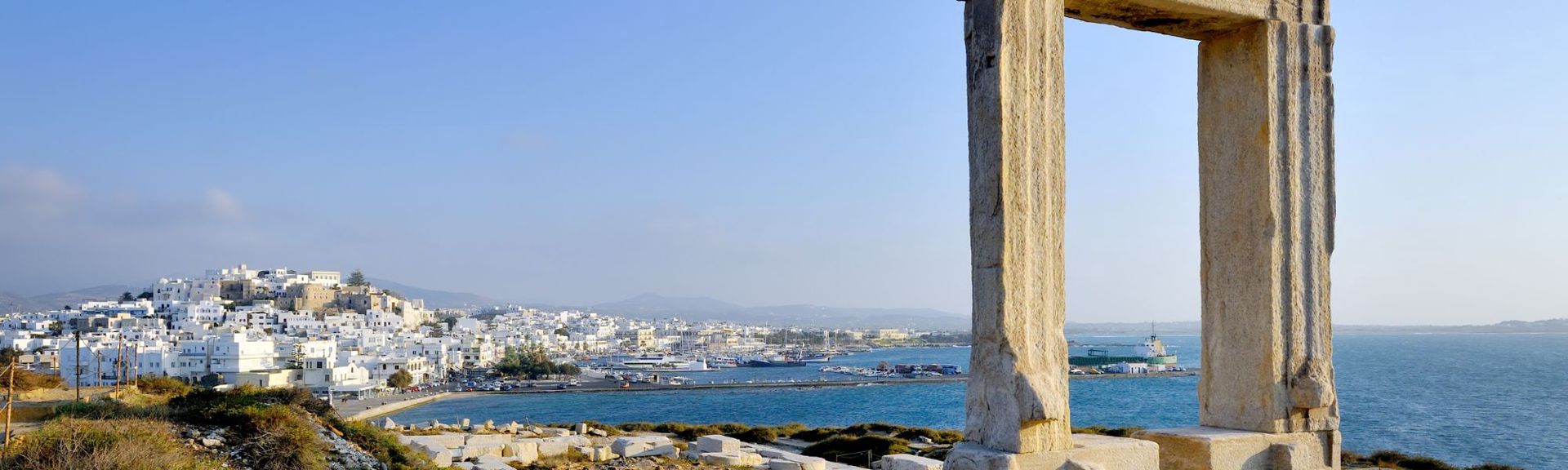
Take a slow evening stroll up to the Portara, the massive marble gateway to an unfinished ancient temple dedicated to Apollo, sitting on a small islet connected to Chora by a causeway. The walk is easy enough for little legs, the open space around the monument is perfect for burning off pre-bedtime energy, and the sunset view through the ancient stone frame is unforgettable.
There are several village clinics and a large hospital in Naxos Town, so families traveling with babies, young children and their grandparents can relax knowing that medical support is accessible across the island.
School-Aged Children
School-aged kids thrive on interactive experiences, and Naxos delivers. Book a family farm-to-table cooking class combined with a Kouros tour. These guided experiences take you into the fertile heart of the island, where children can see exactly where their food comes from. During the class, kids get their hands messy learning to knead dough, roll traditional cheese pies, and mix fresh tzatziki. Afterward, the tour typically includes a visit to one of the ancient Kouros statues — massive, unfinished marble figures abandoned in ancient quarries that will spark their imagination.
The Naxos Archaeological Museum in Chora is compact and manageable for children, with impressive finds spanning from the Neolithic period through the Cycladic era. Entry is free for EU citizens under 25 and very affordable for everyone else.
Visit a local cheese farm in the mountainous interior. Naxos is famous for its Graviera cheese, and watching the production process is genuinely fascinating. Pair this with lunch in the mountain village of Halki, neoclassical buildings, a working kitron distillery, local art shops, and quiet tavernas with outdoor seating. Halki was once the capital of Naxos, and the village has a life and charm that most tourists on the coast never discover.

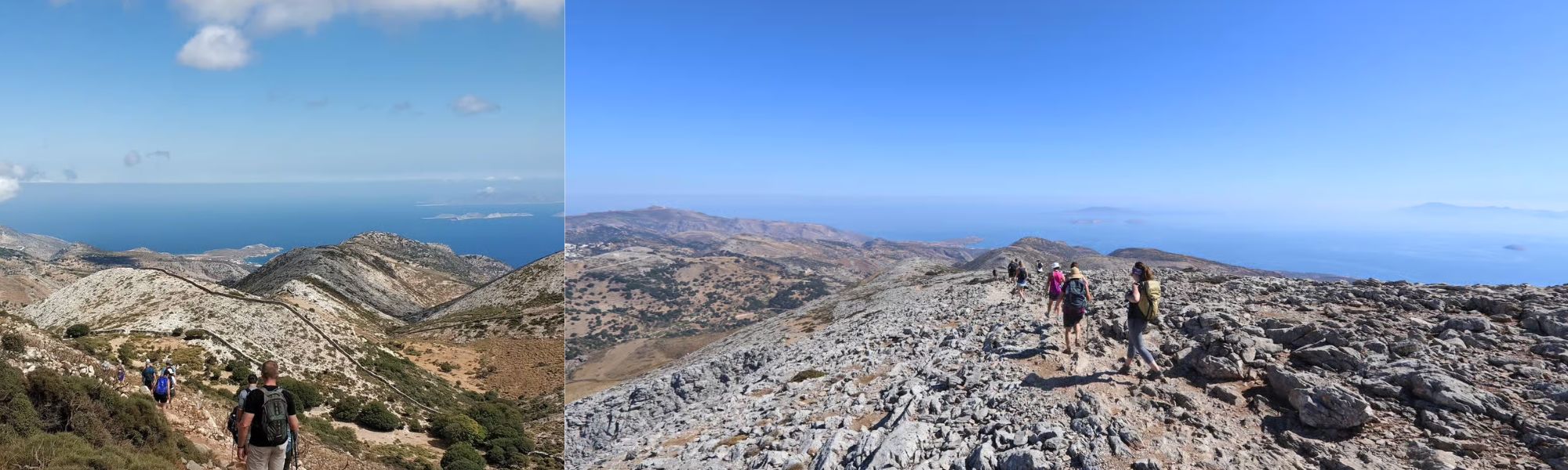
For a rainy afternoon or a break from the beach heat, Zas Cave near Mount Zeus offers a short, easy adventure. Mount Zeus itself (1,001m) is the highest point in all the Cyclades, the hike is strenuous but the mythology alone (Zeus was supposedly raised in the cave at its base) makes it irresistible for children who have been studying Greek myths.
Book a Hike to the Top of Mount Zas with a Guide from Euro 78 per adult
Teenagers
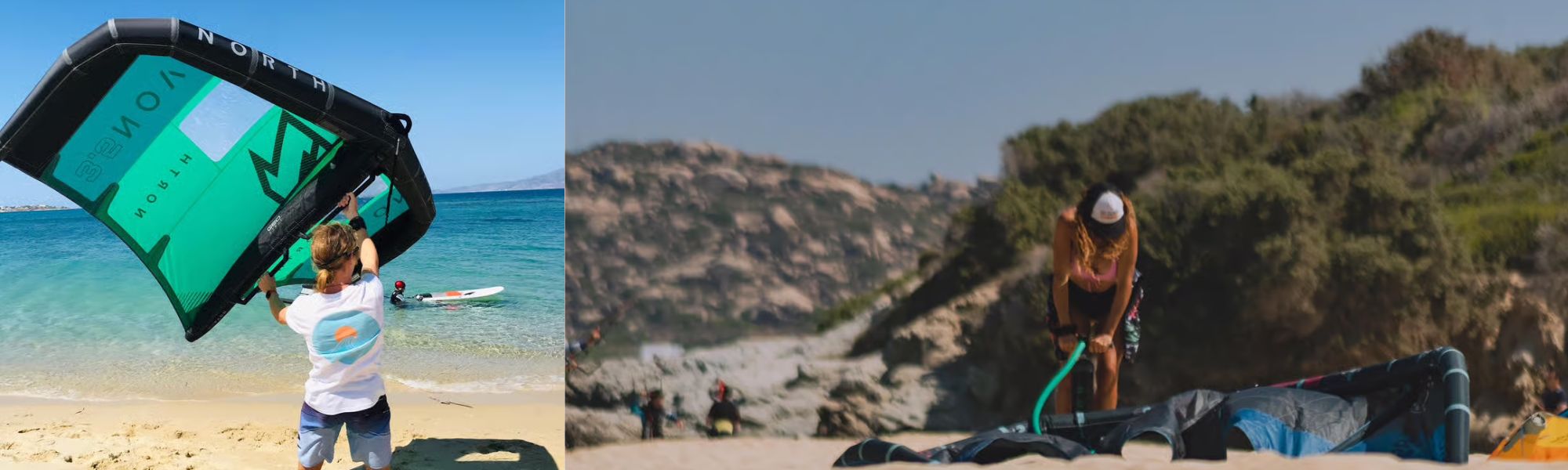
Teenagers need independence and adrenaline, and on this Naxos delivers well also. Head down to Plaka, Mikri Vigla, or Laguna Beach where older kids can take windsurfing or kitesurfing lessons. The water sports culture here is welcoming to beginners, and the Meltemi wind in July and August creates ideal conditions.
Book Wingfoilling Lessons by Amouditis Kite Center, with Euro 101 per person for 2 hours.
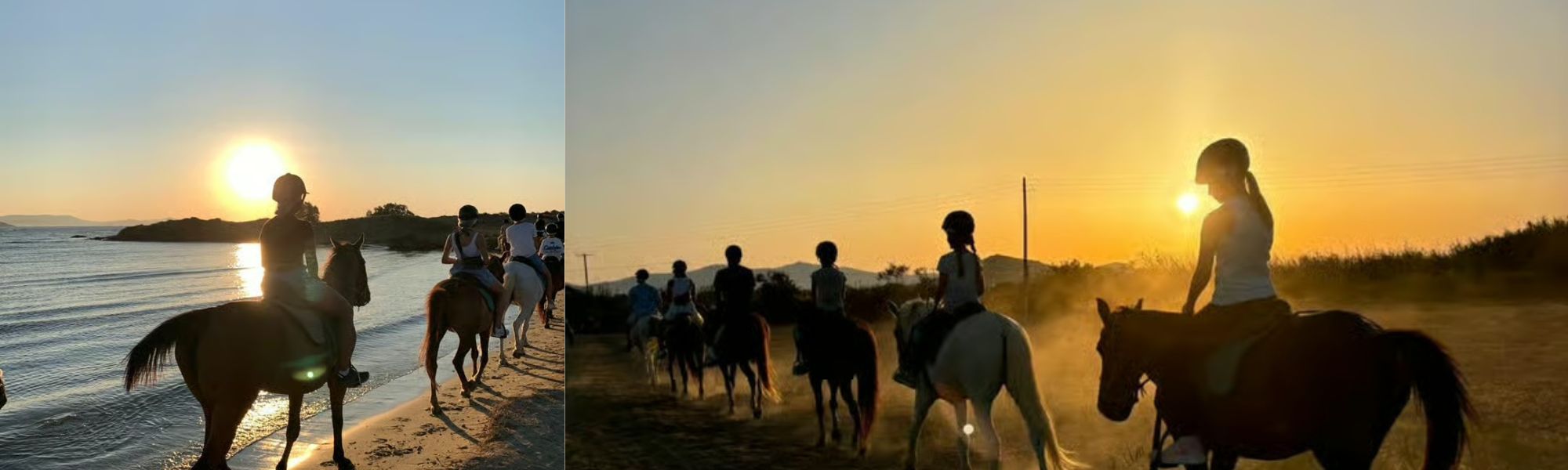
For a truly unforgettable afternoon, book a horseback riding excursion along the beach, with Euro 85 per person for 1 hour. Guided rides take you along the sandy coastline, often timed perfectly with golden hour. Riding through the gentle surf as the sun sets over the Aegean Sea toward the neighbouring island of Paros is a bucket-list experience that even the most hard-to-please teenager will love.
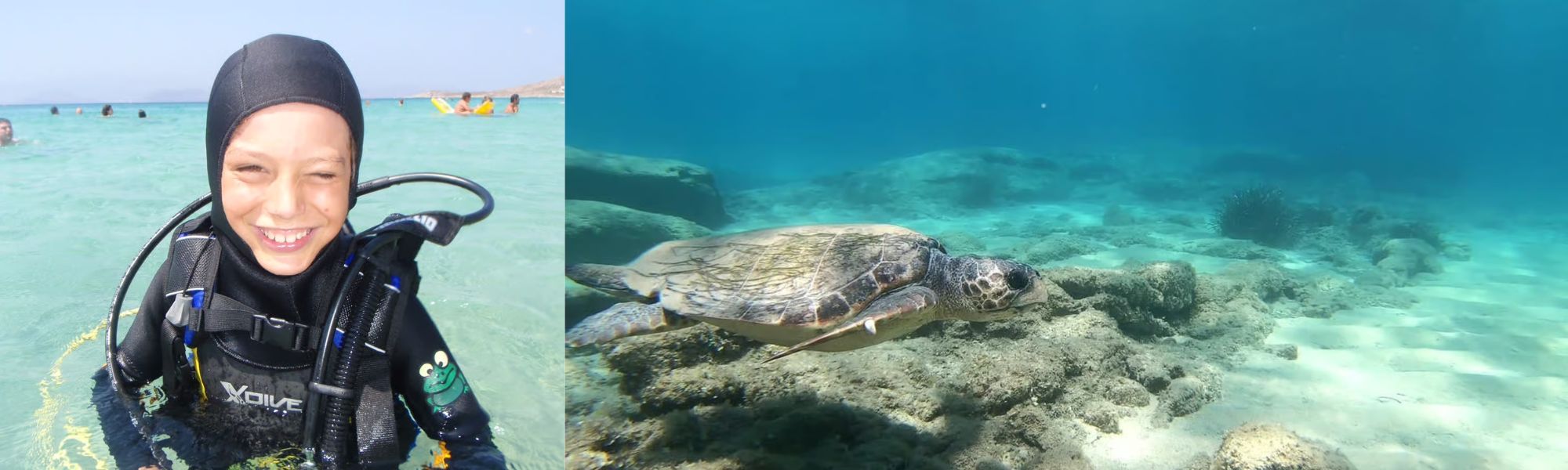
Scuba diving and snorkelling are also excellent options for teenagers. Blue Fin Divers, a PADI 5-Star Resort at Agios Prokopios, offers snorkelling sessions and courses. There are over 10 dive sites around the island, including the Beaufighter WWII aircraft wreck, now an artificial reef teeming with marine life.
Cultural Experiences and Authentic Food
Greek culture places a huge emphasis on family, and you will find children are welcomed warmly in every restaurant and taverna. Eating out is a joyous, noisy affair where kids are encouraged to try new things.
Because Naxos is the agricultural powerhouse of the Cyclades, the culinary scene is exceptional, and genuinely affordable. Naxian Graviera cheese (try it fried or melted over chips), fresh seafood, slow-cooked lamb, and the island's own Kitron citrus liqueur are all local highlights. For the adults, a litre of house wine at a local taverna runs around €8–10 and is invariably very good.
In the evenings, embrace the local rhythm. Greek families eat late, and it is entirely normal to see children playing in village squares past 9 PM. Grab a gelato, take a slow stroll through the winding alleys of Chora, and let your kids soak in the vibrant, safe atmosphere of an island summer night.
Don't miss: The summer Naxos Festival (June–September), featuring live music, dance, and theatre at the stunning Bazeos Tower. The Dionysia Festival in August is a more traditional celebration with feasts, music, and village dancing that the whole family will love.
Family-Friendly Logistics and Ferry Travel
Getting to Naxos
The most common route for international families is flying into Athens (ATH) and taking the ferry from Piraeus or Rafina. High-speed ferries take around 3 hours from Piraeus; conventional ferries take 4–5 hours. Check out ferryscanner for all the routes and booking options.
There are also domestic flights from Athens to Naxos Airport (JNX), which is just 4km from Chora. An increasingly popular option is flying into Mykonos (MYK) and taking a short 45-minute ferry to Naxos, this works well if you want to spend a day or two in Mykonos before settling into the quieter rhythm of Naxos.
Book ferry tickets well in advance for July and August. Upgrade to reserved airline-style seating or a private cabin, the larger ferries have outdoor decks, multiple cafes, and plenty of space for children to move around, which makes a real difference on a 3–4 hour crossing. Pack a small day bag with snacks, entertainment, and a light sweater, as the air conditioning inside the ferries can be surprisingly cold.
Getting Around the Island
Public buses in Naxos are reliable, inexpensive (around €1.80 per ticket from Chora to Prokopios), and run frequently in summer between Chora and the main southern beaches. Buy tickets at the bus station before boarding, you cannot buy them onboard.
That said, renting a car transforms this holiday. It lets you reach the mountain villages, discover hidden beaches, and move on your own timetable without hauling beach gear onto crowded buses. Book your rental months in advance for peak season.
Car rental costs: starting at €50 per day in summer, with the cheapest deals found well in advance online. Always add full insurance, narrow mountain roads and village parking increase the chances of small scratches. Request child car seats at the time of booking. EU and UK licences are accepted; US drivers need to check IDP requirements.
Driving notes: Roads connecting main beaches and villages are in good condition and well-signed in both Greek and English. Mountain village roads are narrow so no need to rush. Parking in Chora is tricky; use the port area or outskirts of town. Outside of Chora, driving is low-stress and genuinely enjoyable.
Packing Essentials for the Aegean Sun
The Greek sun is beautiful but fiercely strong, especially between June and September.
Sun protection is absolutely critical. Pack multiple rash guards with UPF protection for the beach, wide-brimmed hats, and polarized sunglasses for everyone in the family. Bring a trusted high-SPF sunscreen from home — familiar brands can be expensive or hard to find in small island pharmacies.
Bring sturdy, comfortable walking sandals or trainers for the cobblestone streets of Naxos Town and ancient ruins, plus flip-flops for the beach. Water shoes are worth packing if you plan to explore the rockier coves.
Always carry a reusable water bottle, staying hydrated is the easiest way to prevent heat exhaustion. A small lightweight beach bag with a change of clothes, snacks, and a portable charger will serve you well on days out.
Practical Island Tips That Make a Real Difference
Book in advance: For July and August, accommodation and car rentals book up fast. Lock these in 3–4 months ahead for the best selection and prices.
Meltemi wind: The strong northerly Meltemi wind is prevalent from mid-July through August. It keeps temperatures bearable but can make some beaches choppy in the afternoons and occasionally cause ferry delays for high-speed catamarans. Standard ferries are less affected. Beach south-facing coves like Pyrgaki are naturally sheltered.
Health and safety: Naxos is one of the safest places to travel in Greece. There are village clinics spread across the island and a full hospital in Chora. Pharmacies are easy to find.
Ferry rules: If you load your rental car onto the ferry, you will need to leave large luggage in the car on the vehicle deck. Plan your hand luggage accordingly.
Cash: While most restaurants and shops now take cards, some smaller village tavernas and beach sunbed operators are cash only. Carry some euros.
Mobile data: Greek SIM cards are inexpensive and widely available. If you are traveling from within the EU, your existing plan likely covers Greece with no extra charge.
Start Planning Your Mediterranean Getaway
Traveling to Naxos with your kids offers a genuinely rare opportunity: the soul of authentic Greece — real food, real villages, real culture — without the prices or crowds that have come to define its more famous neighbours. By choosing the right base, renting a car for a few days to explore the island's interior, and mixing lazy beach mornings with one or two memorable experiences each week, you set the stage for the kind of holiday your family will talk about for years.
The key to family travel in the Greek islands is flexibility. Leave room for impromptu stops, embrace the slow pace of island life, and resist the urge to fill every day. Some of the best moments in Naxos happen when you have nowhere in particular to be — a long lunch that stretches into the afternoon, a spontaneous drive to a quiet beach you had not planned to visit, children still playing happily in a village square long after sunset.
Naxos will surprise you. It always does.